Live tuning
Centered on the decision.
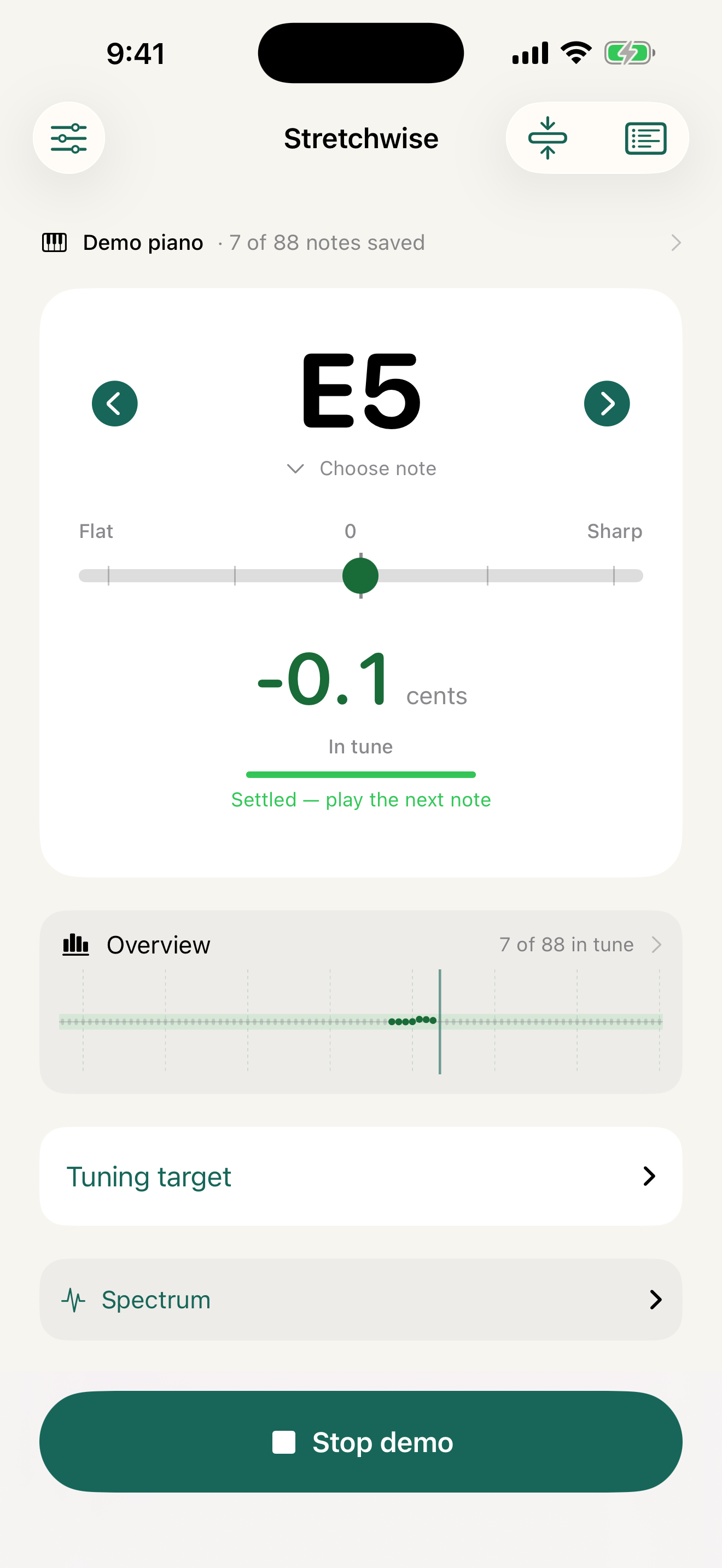
The current note, direction, cents, and settling state dominate. The persistent Stop control stays reachable while the rest of the page scrolls.
For piano technicians
Stretchwise listens to the partials of each string, measures its inharmonicity, and builds a stretch curve for that instrument—not an average piano.
Feel the difference
Read the direction, distance, and confidence at a glance. Stretchwise holds the last trustworthy reading through silence and shows when a note has genuinely settled.
Flat · tune upward
One continuous workflow
Every screen is designed around the technician’s sequence—not around the software’s internal model.
Create or select an instrument so readings, curve corrections, reference pitch, visits, and notes stay together.
Strike the displayed key. The meter smooths the reading, rejects likely room noise, and shows progress as the pitch steadies.
Play the adjacent key and Stretchwise follows. Or tap the large note to jump directly anywhere on the keyboard.
See the whole piano against its targets, return to notes that need work, and export a PDF or CSV report.
Inside Stretchwise
These are live screens from the current iPhone and iPad builds.
Live tuning
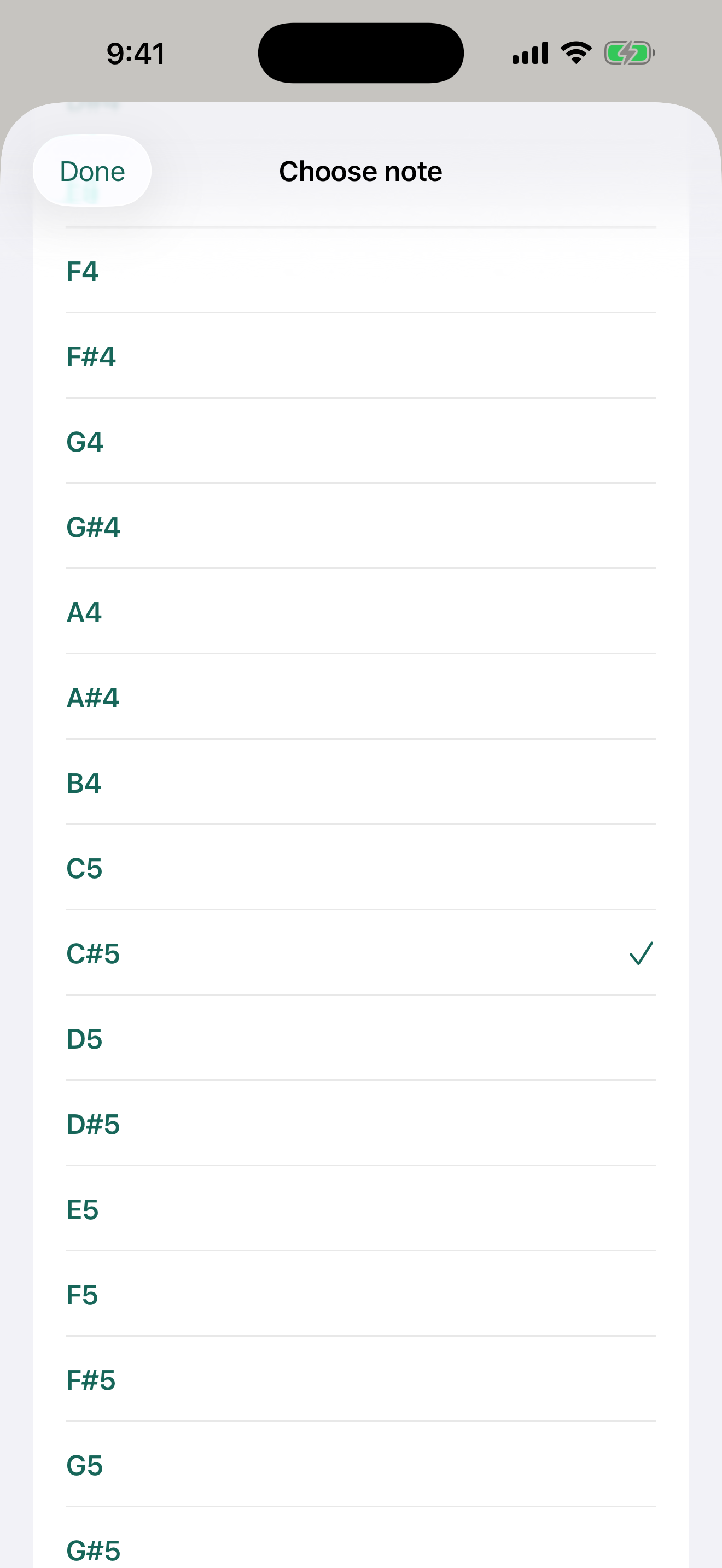
The current note, direction, cents, and settling state dominate. The persistent Stop control stays reachable while the rest of the page scrolls.
Per-note targets
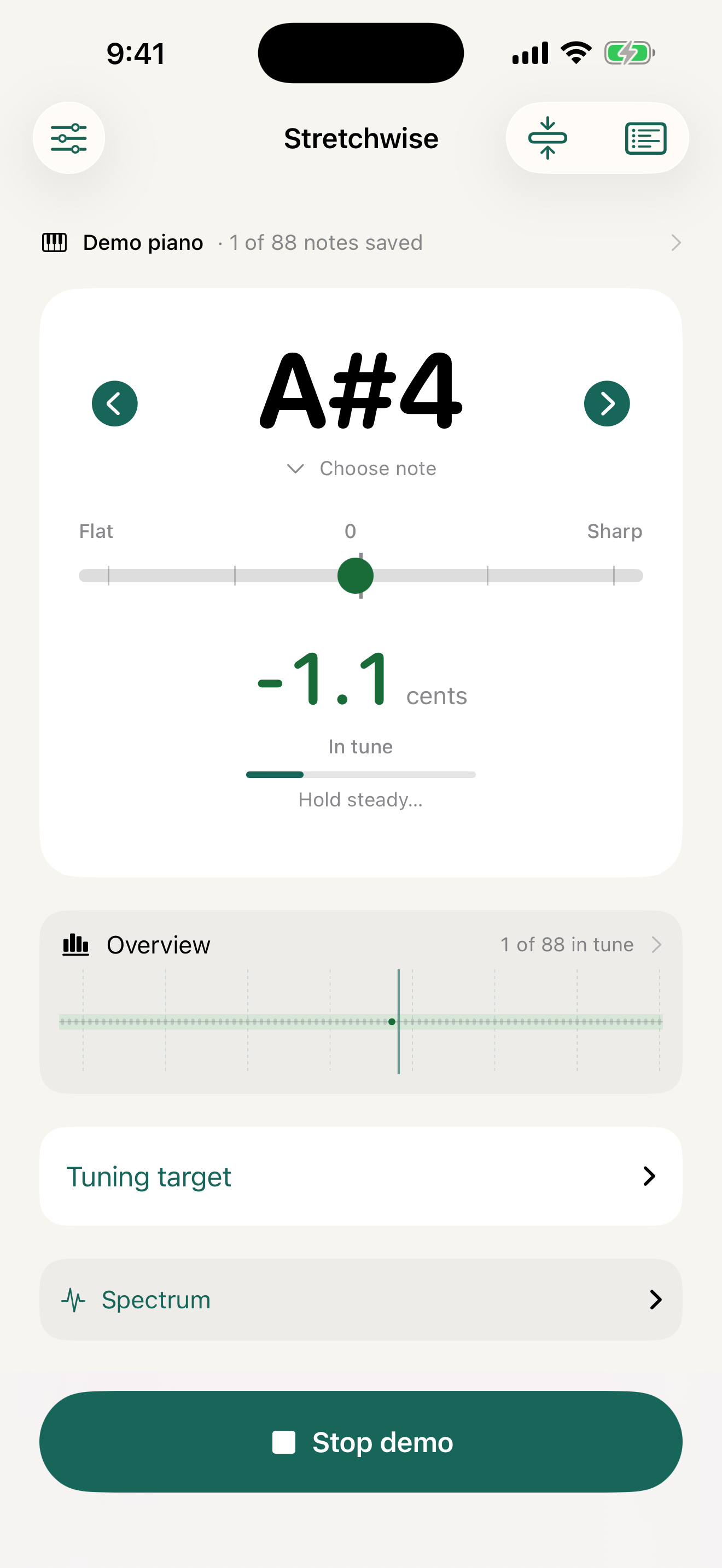
Nudge a single target in half-cent steps or carry the correction through its octave chain. The adjustment remains with that piano.
Direct navigation
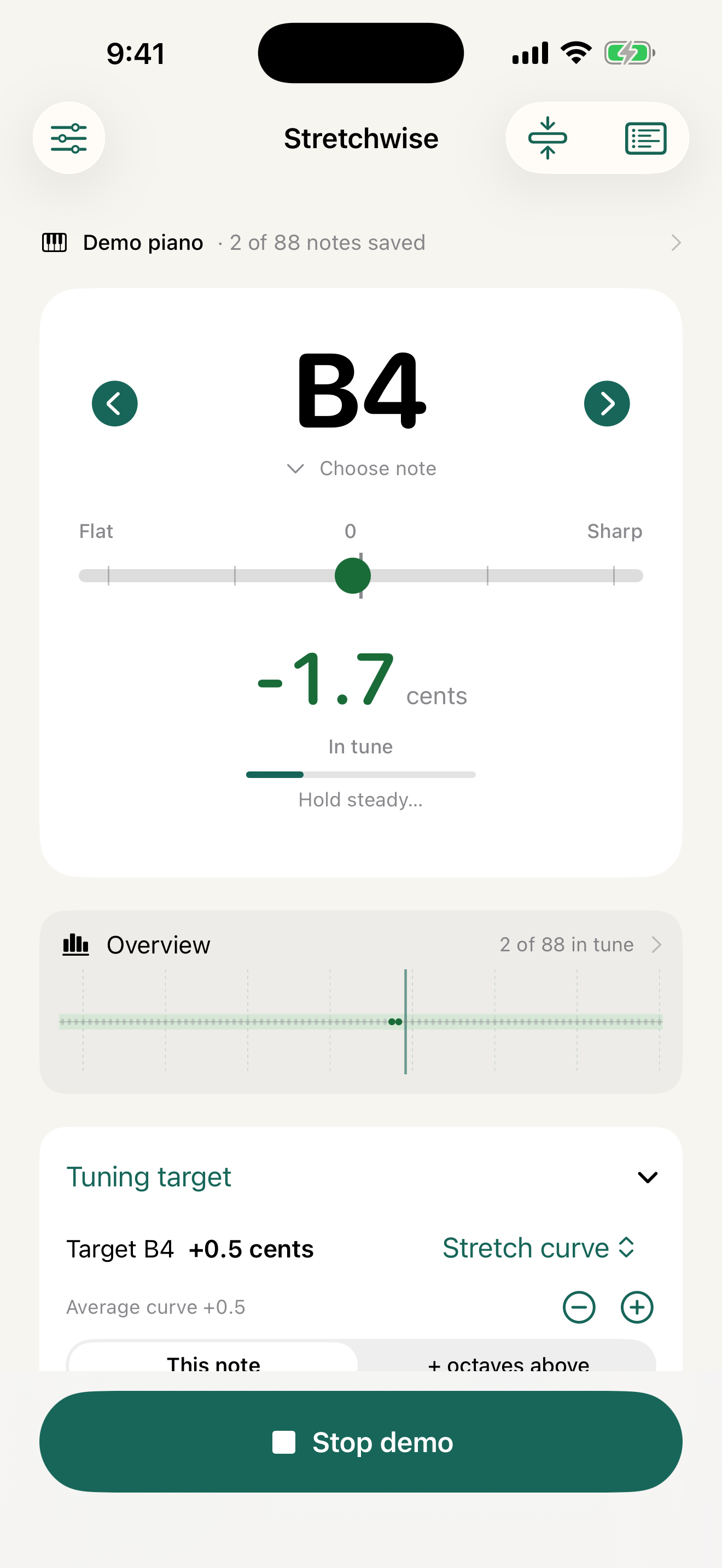
The note picker opens around the current key. AutoNote handles the normal sequence; direct selection handles everything else.
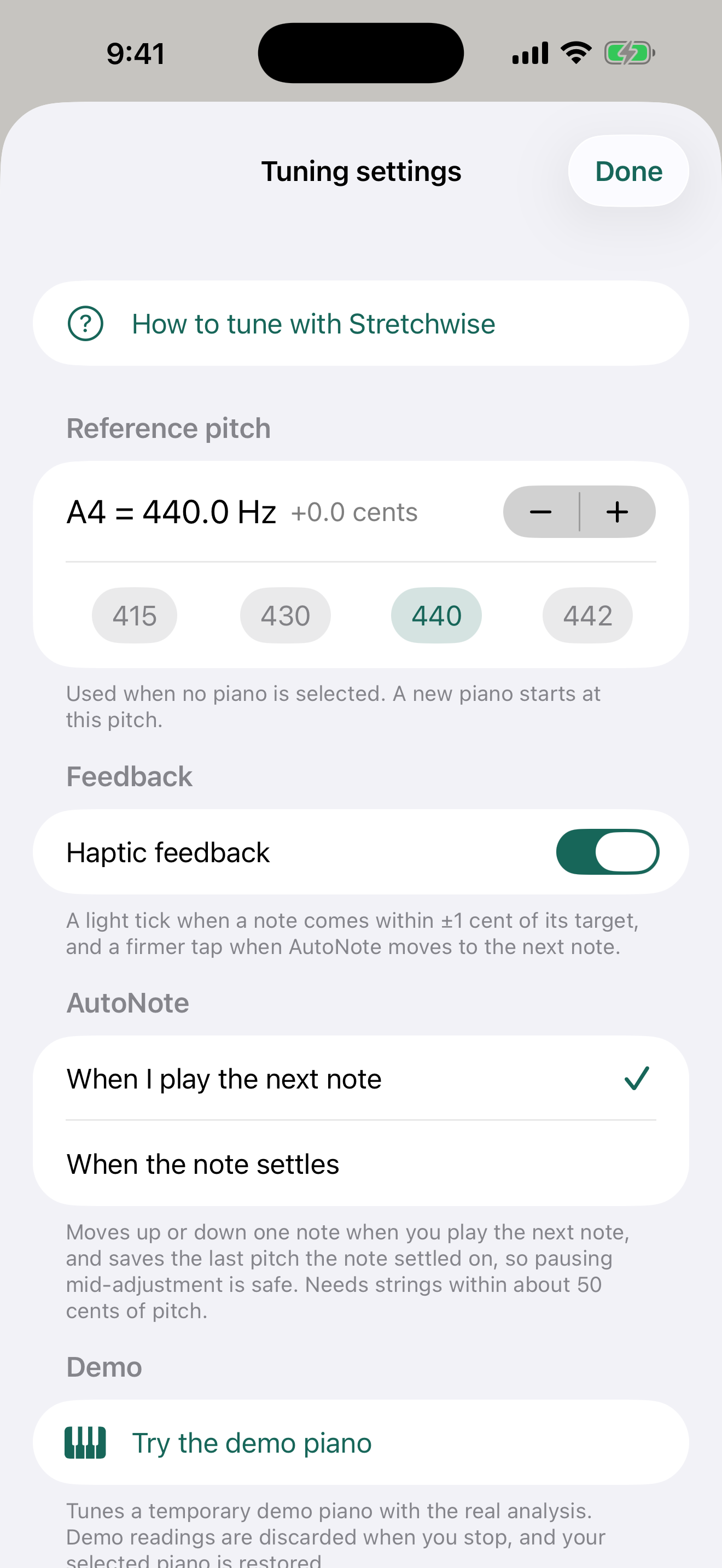
Tuning preferences
Reference pitch, haptic feedback, AutoNote behaviour, pitch-raise tools, and demo mode live together without crowding the meter.
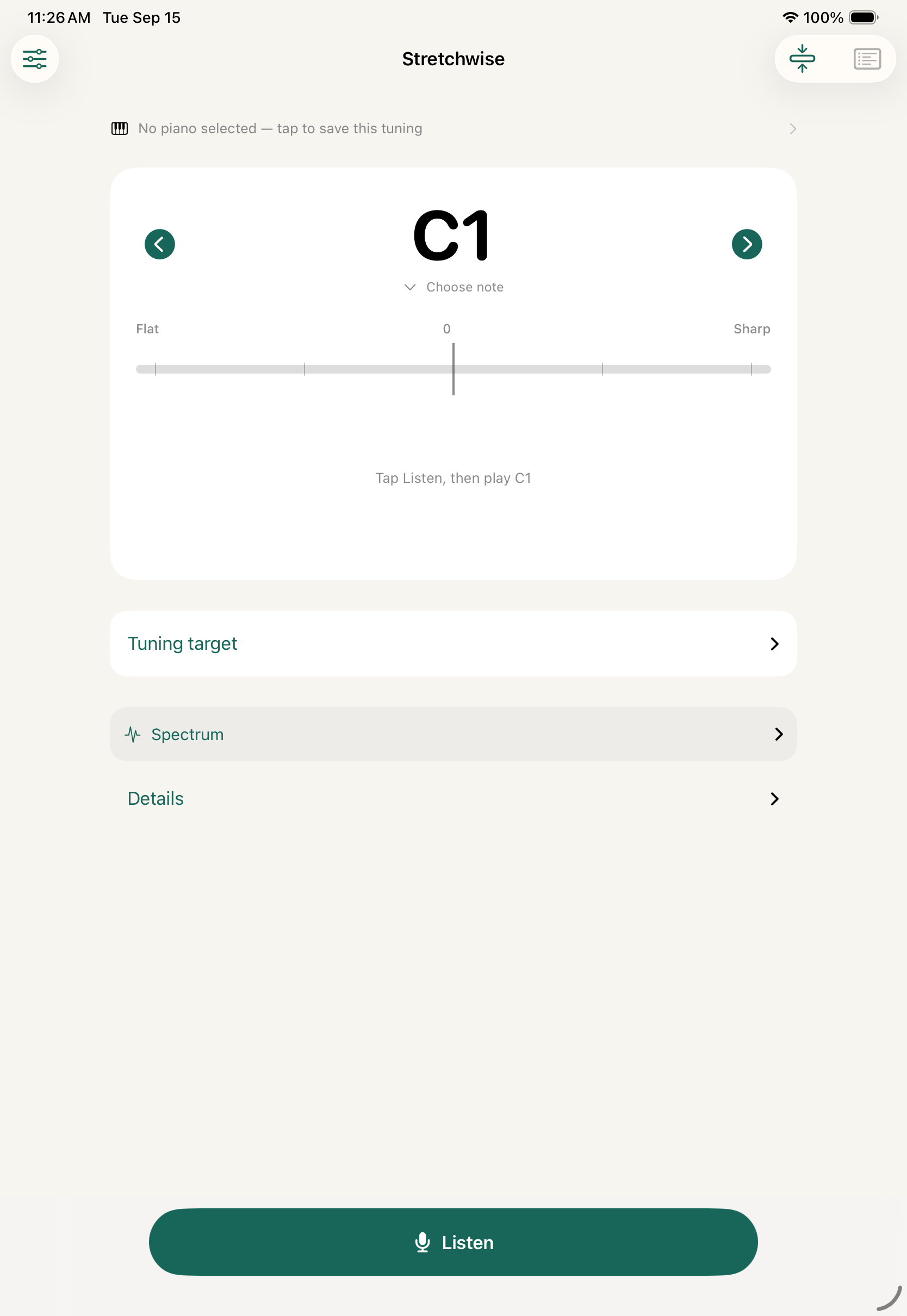
iPad
The interface expands into a centred, glanceable workspace in portrait. Wider windows can add an analysis sidebar without stretching the tuner.
The piano is the model
Piano strings are stiff. Their partials run progressively sharp, and every scale and instrument behaves differently. Stretchwise fits multiple partials, estimates inharmonicity note by note, and uses those measurements to shape the target curve.
A restrained curve with closer octaves and a clear, composed center.
Three stretch styles let the technician choose the musical character while the measured piano remains the foundation.
A complete working toolkit
Every saved note appears against its target. Jump to the notes that need attention or continue with the next unmeasured key.
Choose from 56 meantone, well and Bach temperaments, each calculated from its original definition, or create your own and import TuneLab temperaments.
Calculate per-note overpull for a piano far below pitch, with safeguards and a one-string unison workflow.
Inspect the spectrum around the relevant partial, the fitted string model, and possible split-unison behaviour when the simple answer is not enough.
Keep client, instrument, location, visit history, tuning settings, readings, and corrections in one durable record.
Bring in supported TuneLab, Entropy, and note-table files. Share a finished tuning as a polished PDF or detailed CSV.
Your work stays yours
Measurement and piano records work offline. Back up every piano to a file you control. When iCloud sync is enabled in a configured build, private records can stay current across your own devices.

Stretchwise for iPhone and iPad
The app is in active development and is not yet available on the App Store.
Questions? Talk to us